Executive Roadshow Transportation in NYC and NJ
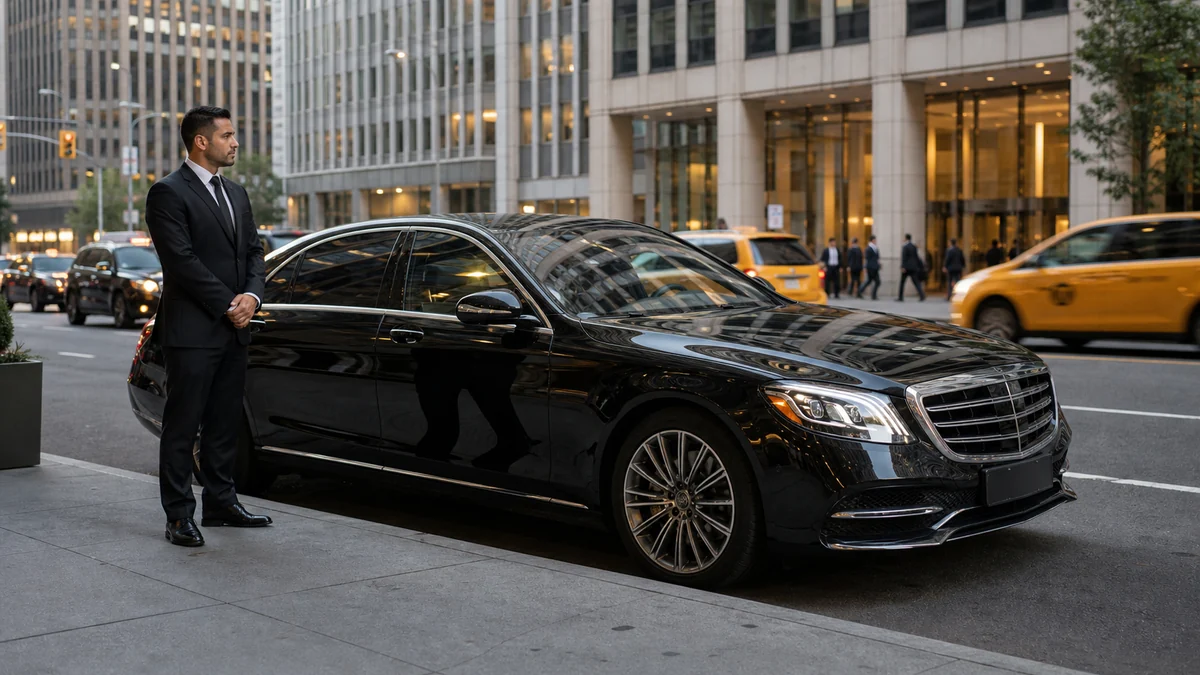
Executive roadshow transportation is a chauffeured sedan, SUV or Sprinter booked by the hour to move a management team between investor meetings in New York City and New Jersey. The car stages before each meeting ends and waits nearby. As of September 2026, a First Class Sedan is $169.99 an hour plus 15% gratuity and tax, with a 2-hour minimum.
This guide covers how roadshow days are planned, which vehicle fits the team, what it costs, and the routes that slow a day down.
What Executive Roadshow Transportation Is
A roadshow is a compressed string of investor meetings. A management team, usually a CEO and CFO plus a banker or two, sits down with institutional investors to pitch a deal: an IPO, a follow-on offering, sometimes a bond. The SEC’s guidance on the IPO process covers why these meetings happen. Our part is the ground transportation: moving the team between meetings so nobody in the car has to think about it.
On a heavy day the back seat is often the only quiet room the team gets, for reviewing notes before the next meeting or taking a call with the deal team. The car stages early, the chauffeur knows the next address and entrance, and nobody has to ask how long the drive will take.
A roadshow works best planned as one day, not as a string of separate rides. Building entrances get confirmed in advance, since many Manhattan towers have more than one. Our corporate transportation Newark page covers the account side.
How Multi-Stop Investor Itineraries Work
Send the itinerary a day or two ahead, as a spreadsheet or a forwarded email. Dispatch rebuilds it as a driver document: stop number, address, building entrance, meeting times, and the gap to the next stop.
The gaps decide the day. Crosstown traffic in Manhattan between 9 AM and 6 PM is slow, so a 15-minute gap between meetings across Midtown is rarely enough. We pad the driving times and flag any tight transition before the day starts, so the team hears about it on Tuesday instead of finding out on Thursday.
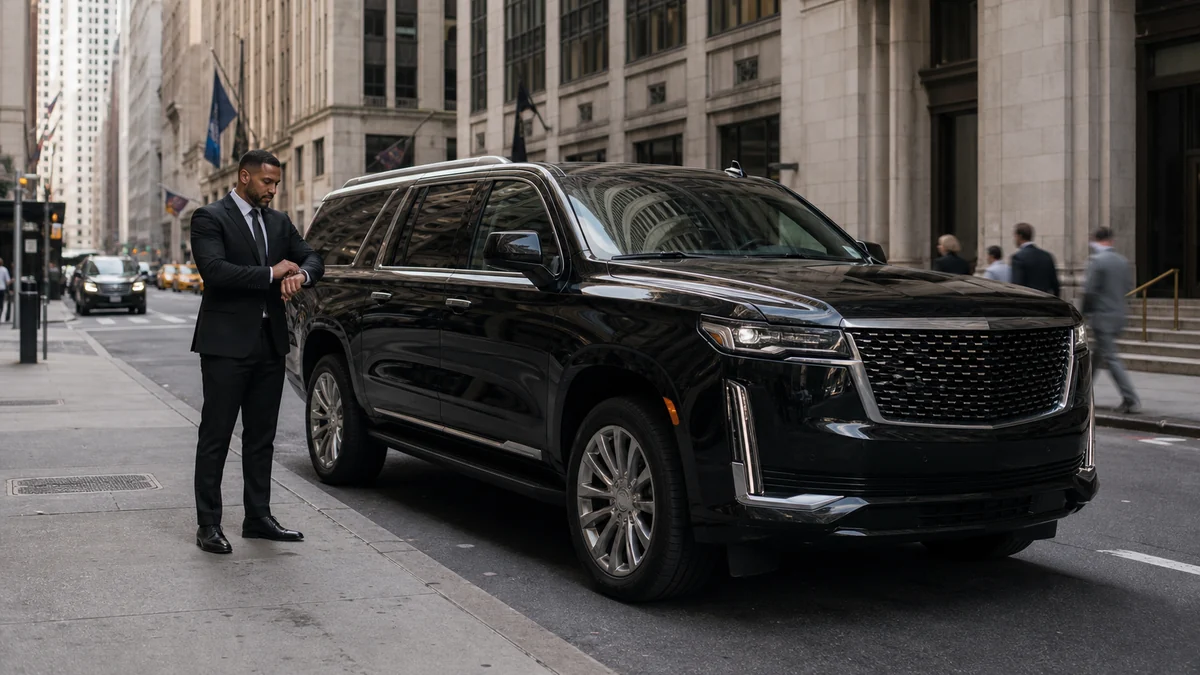
On a tight day the car does not leave between meetings. The chauffeur holds a legal curb near the building, so when a meeting ends early the doors are already open. If the roadshow also includes airport pickups, those are planned as separate trips with flight tracking. Our corporate travel Newark airport tips guide covers that side.
Vehicle Options for an Executive Roadshow
Most roadshow teams book the First Class tier, because the day can last 10 hours or more and the back seat doubles as a workspace. A First Class Sedan (Mercedes S-Class, BMW 7 Series, Audi A8L or similar) seats up to 3 and suits a principal and a banker.
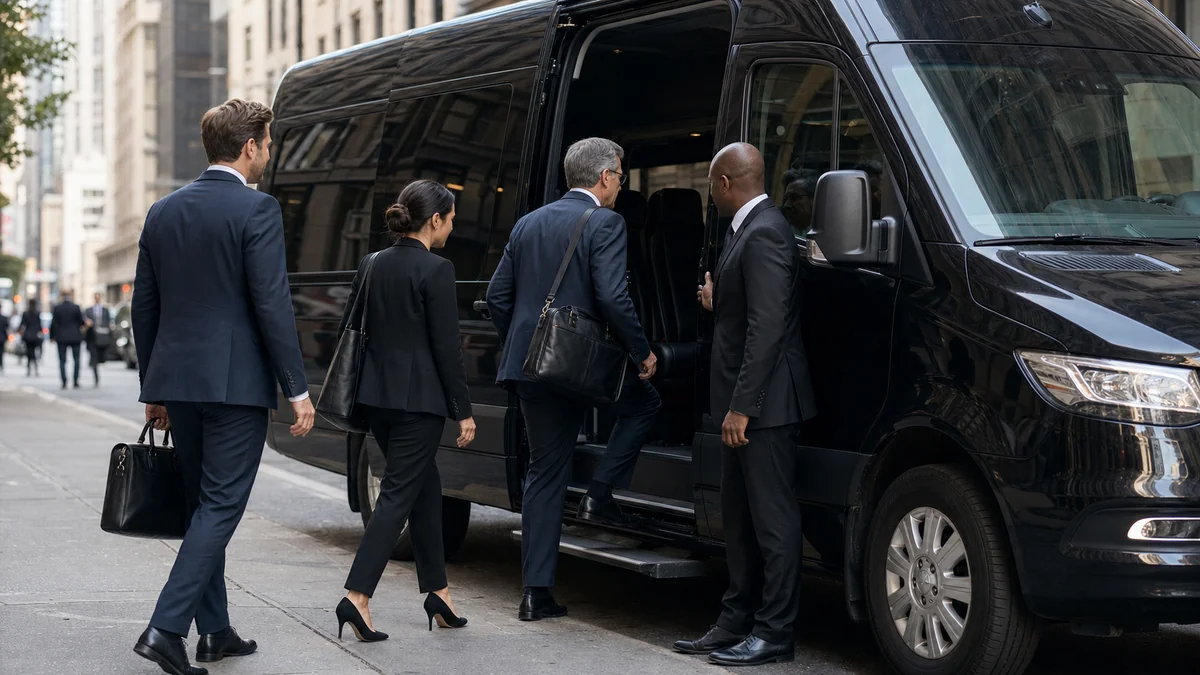
A First Class SUV (Cadillac Escalade ESV, Lincoln Navigator or similar) seats up to 5 with 5 bags, a good fit for three or four people or a team heading to the airport at the end of the day. For a full management team plus bankers, a Business Sprinter Van (Mercedes Sprinter, Ford Transit or similar) seats up to 12 and lets the team talk through the next pitch together. A principal who wants quiet between meetings may prefer a sedan.
As of September 2026, a First Class Sedan is $169.99 an hour and a First Class SUV $159.99 an hour, each plus 15% gratuity and tax, with a 2-hour minimum ($425.68 and $400.64 all-in for the minimum). A Business Sprinter Van is $220.00 an hour plus 15% gratuity and tax, with a 3-hour minimum ($826.36 all-in for the minimum). Current prices are on the complete EWR rate sheet, and the corporate transportation Newark page has the fleet detail.
Planning Your Roadshow Schedule the Night Before
By the evening before day one, we confirm the pickup time and address, the chauffeur’s name and phone number (shared with the banker’s assistant), the full stop list, and a plan for any transition flagged as tight.
We also suggest one midday break of about 25 minutes, so the team can get coffee or take a private call and the chauffeur can tidy the cabin. A planned pause keeps the afternoon meetings on schedule.
For roadshows that last more than one day, the same car and chauffeur can pick up again the next morning. If day two starts in New Jersey, a car can be staged there instead. To compare a corporate account with booking apps, see our corporate car service vs Uber for business breakdown.
Common Roadshow Routes: Midtown to Downtown to NJ
Most New York roadshow days follow the same shape. Morning meetings cluster in Midtown, at asset managers and bank conference rooms between about 42nd and 57th Streets. By early afternoon the day often moves downtown to the Financial District. Park Avenue to Wall Street at 1 PM is one of the slowest moves of the day, so it gets extra time in the plan.
Many roadshows add a New Jersey leg: asset managers and insurers along the Jersey City waterfront, and corporate offices toward Short Hills and Morristown. A common two-day plan is New York meetings on day one, a New Jersey morning on day two, then back to the city or on to Newark Airport for the flight home. The Lincoln Tunnel between 8 and 9 AM is the usual bottleneck, so for an 8:30 meeting in Jersey City a 6:45 departure from Midtown is safer than 7:30. If the roadshow ends at the airport, our Newark Airport car service covers the final leg.
Good roadshow transportation comes down to planning: confirmed entrances, padded transitions, and a car that is waiting when the meeting ends.
Frequently Asked Questions
It is full-day, multi-stop car service for a management team during a string of investor meetings, usually tied to an IPO or a follow-on offering. The car moves a CEO, CFO, and their bankers between meetings across NYC and NJ without anyone in the back seat thinking about logistics. The vehicle stages early, the driver knows each address in advance, and the schedule is built as one piece. See the corporate transportation Newark page for the account side.
Roadshow days are booked by the hour, not as a single fare, because the car waits between stops. As of September 2026, a First Class Sedan is $169.99 an hour and a First Class SUV $159.99 an hour, each plus 15% gratuity and tax, with a 2-hour minimum. The total depends on hours, vehicle and how many cars the team needs.
Yes, and that is the core of how a roadshow is handled. Send the meeting itinerary a day or two ahead and it gets rebuilt as a driver document: stop number, address, building entrance, meeting times, and the gap to the next stop. The driver holds a legal curb near each building so the team is not left waiting on a sidewalk. For a side-by-side look at a planned car service against piecing the day together with apps, see the corporate car service vs Uber for business comparison.
It depends on headcount and how the team wants to work. A First Class Sedan suits a two-person team, a principal plus one banker, who want a quiet cabin and room to review notes. A First Class SUV fits three or four people, or anyone carrying bags toward an airport leg. A Sprinter works for a full management team of six or eight who want to rehearse the pitch together while moving. One caveat: a principal who wants silence is better off in a sedan than a busy van.
Start with a realistic itinerary. Rebuild the meeting list as a driver document, pad the driving estimates for real traffic, and flag every transition that looks tight before the day begins rather than after. Build in one midday reset stop so the team gets a breath. For multi-day swings that cross from NYC into NJ, decide ahead whether the same car resumes the next morning or whether a fresh vehicle stages on the other side. The corporate airport side of these trips is covered in the corporate travel Newark airport tips guide.
Yes. A typical investor swing covers Midtown and downtown Manhattan plus the NJ asset managers along the Hudson waterfront in Jersey City and the corporate corridor toward Short Hills and Morristown. The hardest transitions are Park Avenue to Wall Street in early afternoon and the Lincoln Tunnel between 8 and 9 AM, both padded into the schedule. Many swings end at Newark Airport for the flight home, and the wider Newark Airport car service coverage handles that final leg.