
How to Get from Newark Airport to JFK
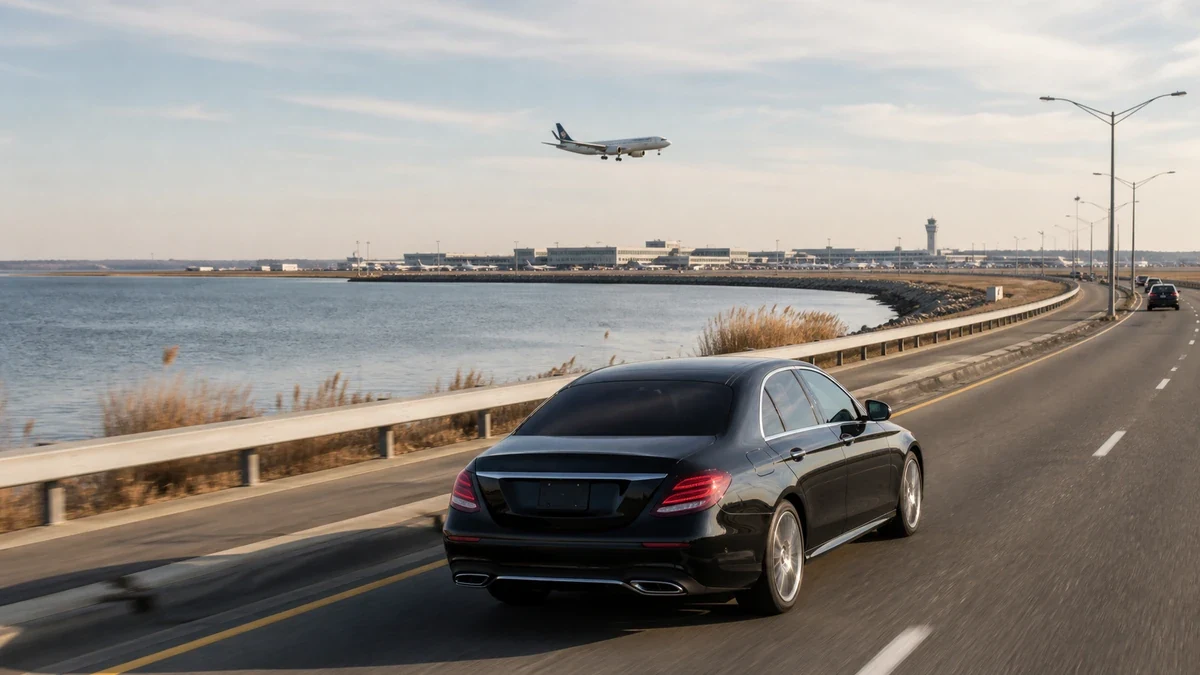
A couple of months back I picked up a passenger off a delayed United flight at EWR Terminal C at 2:50 PM. He had a 6:10 departure out of JFK Terminal 4, an international leg, and his bag was already checked through. He’d assumed the two airports were basically next door. They aren’t. The answer to how to get from Newark to JFK is that it’s a real trip, roughly 35 miles, and on the wrong afternoon it can eat two hours. Our driver left the Terminal C curb at 3:05, took the Goethals to the Belt, and had him at Terminal 4 departures by 4:25. He made it. Barely.
I see this self-connection play out a few dozen times a month, and the questions never change. So here’s the working version. Car service, NJ Transit with the AirTrain, taxi, Uber. What each costs, how long each takes, and which one I’d put my own family in.
| Option | Typical time | Cost range | Best for |
|---|---|---|---|
| Private car service | 50 to 90 min | Fixed quote | Tight connections, bags, anyone who can’t risk the variability |
| NJ Transit + AirTrain | 2 to 2.75 hr | ~$24 to $30 | Solo traveler, light bag, generous time buffer |
| Taxi (metered) | 50 to 90 min | ~$110 to $160 | Walk-up at the curb, no app, no advance booking |
| Uber / Lyft | 50 to 90 min | ~$90 to $170 | Off-peak hours, no surge, traveling light |
Effective May 2026. Times are curb-to-curb for typical weekday mid-day traffic. Add 30 to 60 minutes for the 3 to 7 PM window, river-crossing backups, or weather. Costs are estimates, not quotes.
Option 1: Private car service, the fastest door-to-door
If the clock matters at all, the simplest answer to how to get from Newark to JFK is to book a car. A pre-arranged sedan or SUV meets you at the EWR arrivals curb, you load once, and you don’t touch the bag again until JFK departures. No transfers, no platform, no hauling a suitcase up a station ramp. Curb-to-curb time is usually 50 to 90 minutes depending on which crossing the driver takes and what hour it is.
The two things that make a car service worth the money are the fixed rate and the flight tracking. Our dispatch team watches your inbound flight, so a 90-minute delay doesn’t cost you a re-booking fee. And the quote you get is the price you pay, no meter creeping while you sit in a Belt Parkway backup near Howard Beach. For the full breakdown of pricing, vehicle options, and pickup logistics, see the EWR to JFK car service page. If your trip is part of a wider itinerary, the NYC airport-to-airport transfer page covers LaGuardia connections too.
The limitation: a car sits in the same traffic everyone else sits in. It can’t teleport you past a jackknifed truck on the Goethals Bridge. What it does is take every other variable off your plate, the navigation, the parking, the payment, the not-knowing-which-terminal, so the only thing left is traffic, and a driver who does this weekly knows when to bail to the Outerbridge instead. Fixed pricing by vehicle sits on the complete EWR rate sheet, and the wider service area is on the Newark Airport car service homepage.
Option 2: NJ Transit to the AirTrain, the cheapest way
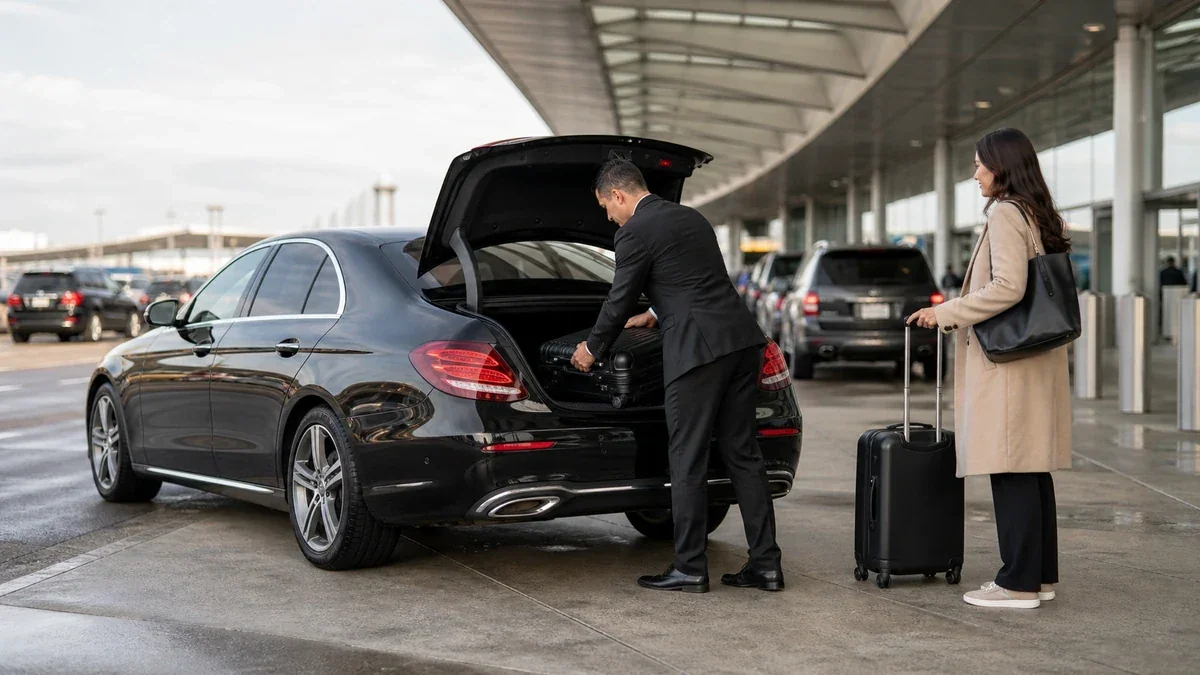
The cheapest answer to how to get from Newark to JFK is public transit, and if you’re solo, traveling light, and you’ve got time to spare, it’s a fair call. It’s three legs. AirTrain Newark from your EWR terminal to Newark Liberty Airport Station. NJ Transit’s Northeast Corridor or North Jersey Coast Line from there into New York Penn Station, about 25 minutes. Then the subway or the LIRR from Penn out to Jamaica Station in Queens, where you catch AirTrain JFK to your terminal.
Total cost lands somewhere around $24 to $30, give or take. The fastest version uses the LIRR from Penn to Jamaica, which trims the middle leg to about 20 minutes. Door-to-door, plan on 2 to 2.75 hours including the wait between connections. The NJ Transit trip planner gives live schedules, and I’d check it the morning of, because weekend track work on the Northeast Corridor can add 30 minutes without warning.
Where transit falls apart is luggage and timing. Two checked bags, a Penn Station transfer at rush hour, and a connection you can’t miss, that’s a bad combination. Penn is a maze, and if any single leg slips you’re standing on a platform watching your buffer evaporate. For a deeper comparison of every transit permutation against a car, the airport-to-airport transfer guide lays it out leg by leg.
Option 3: Taxi or Uber between the two airports
Both put you in a car without the advance booking, and both work. A metered taxi from the EWR taxi line is the no-app option. Expect somewhere around $110 to $160, since it’s a metered fare plus the bridge or tunnel toll plus tip, and Newark cabs add an out-of-city surcharge for a fare into Queens. You won’t know the final number until you arrive, which I’d flag for anyone on a budget.
Uber and Lyft are the same idea with app pricing. Off-peak, an UberX from EWR to JFK often comes in around $90 to $110, which can undercut a taxi. The problem is the word off-peak. Between 3 and 7 PM, or in any rain event, surge multipliers push that same trip past $150, sometimes near $170. I’ve watched passengers stand at the Terminal B curb refreshing the app, waiting for a price that wasn’t coming down. There’s more on the cost math in the connecting flights between NYC airports guide.
The other rideshare quirk: a driver who accepts an EWR pickup may not love a 35-mile fare into Queens, and you feel it in the cancellations. For a pre-planned connection, I’d rather have a confirmed pickup than a maybe. A Newark to JFK car service gives you a name and a phone number, worth more on a connection day than the few dollars you might save on a quiet Tuesday.
How to get from Newark to JFK: comparing every option
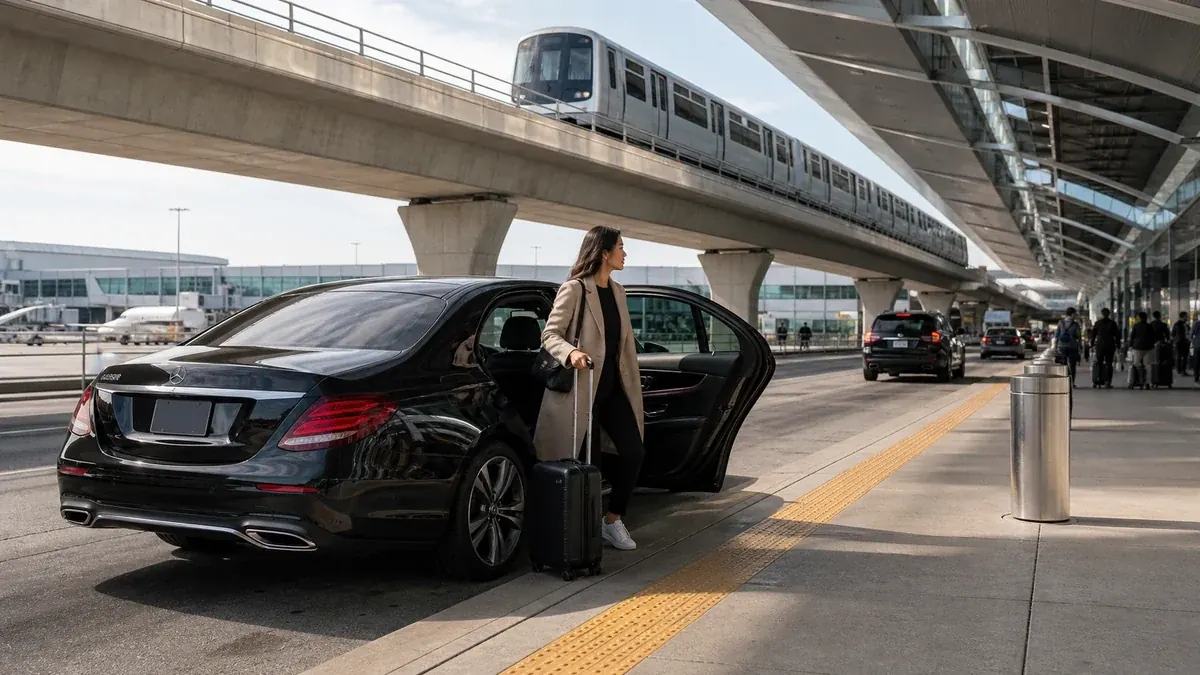
Strip away the noise and the decision comes down to two questions. How much time do you have, and how much are you carrying. For a tight connection, under three hours, a car service is the only option I’d trust, because it removes every controllable variable and leaves you facing traffic alone. For a generous buffer, four hours or more, solo, one carry-on, NJ Transit plus the AirTrain saves real money. Taxi and Uber sit in the middle: fine on a calm off-peak afternoon, risky in the 3 to 7 PM window when surge and traffic stack. The thing nobody factors in is the bag. Every transfer in the transit version is a moment you’re physically moving luggage, exactly what you don’t want after a long flight.
One more point. There’s no direct shuttle, no single train, no one-seat ride between Newark and JFK. The two airports sit on different transit systems on opposite sides of the Hudson, so every option here is a chain of smaller moves. The only question is who handles the chain, you or a driver.
A question I get constantly: does this work in reverse? It does. Everything here applies the same way to a JFK to Newark Airport trip, because the drive, the transit chain, and the time math are identical in either direction. If you are landing at JFK and connecting to a departure at EWR, the same four options hold, a private car service, a taxi or Uber, or NJ Transit with the AirTrain, and I would hold you to the same four to five hour buffer.A pre-booked JFK to EWR car service is still the only single-vehicle, door to door answer. Brooklyn-based travelers facing a choice between the two airports on a single trip often want the drive-time and toll math compared side by side, and our Brooklyn-side EWR vs JFK breakdown lays out the numbers from each neighborhood.
How much time you need between flights
This is the question I wish more people asked before they booked. Whatever you decide about how to get from Newark to JFK, the buffer matters more than the mode, because a self-transfer between two separate airports is not a connection the airline protects. Miss the JFK departure and that’s a new ticket, full fare, with nobody rebooking you for free.
My rule of thumb, held up over 14 years on the customer-experience side: minimum four hours from the scheduled EWR landing to the JFK departure, and I’d prefer five. That sounds like a lot. It isn’t. Subtract deplaning and clearing EWR (20 to 40 minutes with a checked bag), the drive (50 to 90 minutes, or more), and the JFK check-in and security window before an international flight. The timing gets tight fast. The TSA screening guidance is worth a read, and the Port Authority site has live terminal and AirTrain status for both airports.
Here’s the admission. Early on, I framed this like any other EWR pickup and told travelers to plan the buffer we’d use for a Manhattan drop. I was wrong, and a passenger missed a Lisbon flight in 2019 because of it. A separate-airport transfer carries risk a normal pickup doesn’t, and I walk people through it differently now. If your layover is under four hours, I’d tell you to rebook onto a single-airport itinerary before chancing it. For multi-airport itineraries, the guide to connecting flights across NYC airports covers minimum connection times in detail.
Frequently Asked Questions
No. There is no direct shuttle bus, no single train, and no one-seat ride between Newark and JFK. The two airports sit on opposite sides of the Hudson and belong to different transit systems. Every option, whether car service, taxi, Uber, or NJ Transit with the AirTrain, is a single private car or a chain of public-transit legs. A pre-booked car service is the closest thing to a direct trip, since it’s one vehicle door to door.
You have four practical choices. A private car service meets you at the EWR curb and drives you straight to JFK in 50 to 90 minutes, with a fixed rate and flight tracking. A taxi or an Uber does the same drive without advance booking, usually $90 to $170 depending on surge. NJ Transit with the AirTrain at both ends is the cheapest at roughly $24 to $30 but takes 2 to 2.75 hours and involves three transfers through New York Penn Station. The right choice depends on your time buffer and how much luggage you carry.
Yes, but not on one train. From your EWR terminal you ride AirTrain Newark to Newark Liberty Airport Station, take NJ Transit into New York Penn Station, then the LIRR or subway out to Jamaica Station in Queens, and finally AirTrain JFK to your terminal. That’s three transfers and roughly 2 to 2.75 hours door to door, at about $24 to $30 total. It works well for a solo traveler with light luggage and a generous time buffer, and poorly if you have checked bags or a connection you can’t afford to miss.
Off-peak, an UberX from EWR to JFK usually lands around $90 to $110, including tolls. During the 3 to 7 PM rush or in rain, surge pricing can push that same trip past $150 and sometimes near $170. Lyft prices similarly. The catch is you don’t know the final number until you request the ride, and a driver who accepts an EWR pickup may cancel a 35-mile Queens fare. For a connection you can’t miss, a fixed-rate car service is more predictable than a surging app.
For a self-transfer between two separate New York airports, I’d plan a minimum of four hours from scheduled landing to the next departure, and five is safer. The airline does not protect a self-connection, so a missed flight means a new ticket. Subtract deplaning and bag claim at the first airport, the 50 to 90 minute drive, and the check-in and security window at the second. For an international departure, where TSA recommends arriving three hours early, four hours is the floor.
A private car service is the fastest reliable option, curb to curb in 50 to 90 minutes with no transfers and no platform waits. A taxi or an Uber covers the same drive in the same window, so they tie on raw speed, but they lack flight tracking and a confirmed pickup. NJ Transit with the AirTrain is always slower at 2 to 2.75 hours because of the three transfers. On a clear off-peak afternoon any car-based option can do it in under an hour, but only a pre-booked car service is built around the clock you’re racing.
The same way, in reverse. A JFK to Newark Airport trip uses the identical options as the Newark to JFK direction: a private car service from the JFK curb straight to EWR in 50 to 90 minutes, a taxi or Uber over the same drive, or AirTrain JFK to the LIRR or subway, then NJ Transit and AirTrain Newark. Drive time, cost, and the recommended four to five hour connection buffer are the same either way. A pre-booked JFK to EWR car service is the only single-vehicle, door to door option.