
Newark Airport United hub: why fly Newark instead of Philadelphia

A South Philly engineer called me about a Mumbai trip last winter. He’d been a US Airways and then American Airlines flyer his whole career and had never crossed into New Jersey for a flight. His niece’s wedding put him on a United nonstop EWR to Mumbai, and the question was whether the longer drive was a fair trade for the direct flight versus connecting through CLT or DFW on American. I told him yes, it was, and walked him through why. He flew EWR, made the wedding, and came back saying the Polaris cabin was a different planet from the American business product he was used to. He’s a United customer now.
The Newark Airport United hub makes EWR one of the most connected airports on the East Coast, and for Philadelphia-area travelers, it’s often the better call over PHL for international flights, Star Alliance itineraries, and the long-haul cities Philadelphia International doesn’t serve. This guide compares the two airports on networks, terminals, airlines, and ground access so you can pick the right one for your next trip. The short version: flying United or Star Alliance internationally, EWR almost always wins. Flying American Airlines domestically, or living south of Center City, PHL almost always wins. Most travelers fall cleanly into one of those camps. The interesting cases are in the middle, and that’s where this comparison earns its keep.
The Newark Airport United hub advantage
Hub scale: 350+ daily flights, 160+ destinations
United operates 350+ daily flights from EWR to more than 160 domestic and international destinations, making Newark its fourth-largest hub in 2026 behind Chicago O’Hare, Denver, and Houston Bush. Philadelphia, by contrast, is American Airlines’ East Coast international gateway, and United’s PHL footprint is small enough you barely notice it. When a Philly client tells me they’re booking United, the answer is EWR before they finish the sentence.
Star Alliance: 190+ countries through Newark
United is the US anchor of Star Alliance, which covers more than 1,300 airports across 190+ countries. From EWR a single ticket can chain a United domestic into a Lufthansa long-haul into a Singapore Airlines regional, with the bag tagged through and elite-status benefits honored end to end. PHL has Oneworld via American, strong in its own right, but the network shapes differ. Star Alliance has deeper coverage in Africa, Central Asia, and the Pacific. Oneworld leans heavier into Latin America. If your itinerary touches Frankfurt, Munich, Zurich, Vienna, Istanbul, Addis Ababa, Bangkok, or Tokyo Narita, the Star Alliance path through Newark usually has the cleaner connection.
Polaris business class lounge
The Polaris lounge in Terminal C is United’s premium product on the ground, and it’s a meaningful upgrade if you’re flying Polaris business class or United Global Services. Sit-down dining, sleep rooms, real showers, a bar that’s open at the hours you’d want it. PHL has Admirals Club lounges and the Flagship Lounge concept on the American side, which are fine, but they’re not the same tier as Polaris when you’re flying business to Asia.
International network: EWR vs PHL head to head
The international comparison between Newark and Philadelphia splits into three buckets: cities only EWR flies nonstop, cities only PHL flies nonstop, and cities both serve. The both-serve list is bigger than people expect, but the EWR-only list is where the hub advantage shows up hardest.
EWR-only nonstops from the region
Tel Aviv, Mumbai, Delhi, Singapore (one of the longest commercial flights in the world from Newark), Cape Town via Johannesburg or seasonal direct, São Paulo, Stockholm, and Athens, all on United. All Star Alliance-connected at the far end, which matters if you’re continuing past the gateway. Scandinavian, Polish, and Portuguese carriers also operate from EWR at frequencies PHL doesn’t match.
PHL-only nonstops from the region
American Airlines treats Philadelphia as its international East Coast gateway, giving PHL a Caribbean depth EWR doesn’t match. Punta Cana, St. Lucia, several smaller Caribbean cities, and select Latin America cities like Lima and Quito have stronger AA coverage from PHL. American also operates European nonstops from Philly (Madrid, Barcelona, Rome on certain seasons) that compete with Newark’s mix. AAdvantage loyalists, PHL is your hub.
Both airports: London, Paris, Cancun, Dublin, Toronto
The choice usually comes down to schedule and price. Frankfurt and Amsterdam also appear on both lists seasonally, but EWR’s frequency stays higher because of the hub structure. For the practical side of making the trip, see our getting from Philadelphia to Newark Airport piece, which compares Amtrak, NJ Transit, and pre-booked car options head to head.
The rule of thumb
For a one-trip Philly traveler picking between Newark or Philadelphia: if the destination is in Asia, the Middle East, or Africa, EWR almost certainly has a better nonstop. If the destination is in the Caribbean or you’re connecting through Miami or DFW, PHL probably wins. Europe is a coin flip on a per-city basis.
Terminal quality comparison
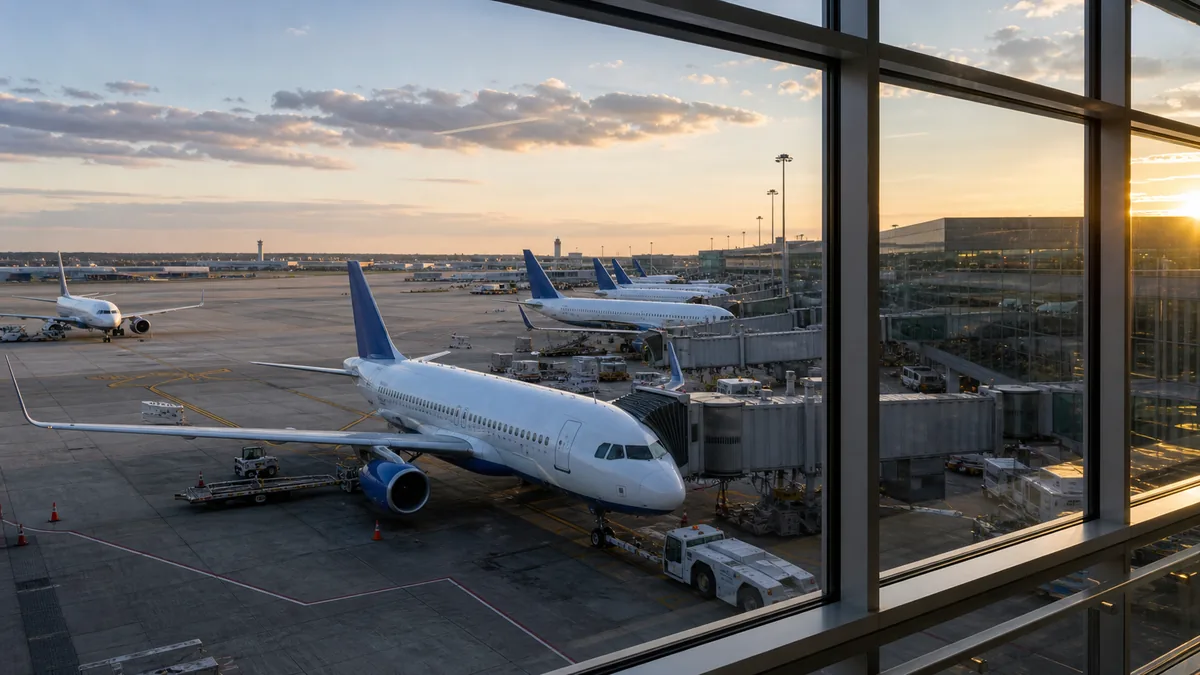
Terminal quality is one of the genuine quality-of-life differences between EWR and PHL in 2026, and it cuts in Newark’s favor more than it used to. The Terminal A rebuild from 2022 has reshaped the on-the-ground experience for a meaningful slice of EWR’s traffic, and Terminal C continues to be the premium United product. PHL is functional but visibly older across most of its concourses.
EWR Terminal A (2022 rebuild)
The new Terminal A opened in 2022 with 33 gates and a dining and lounge mix that finally matches the airport’s traffic. Mostly domestic. JetBlue, Delta, and Air Canada operate here, along with some United domestic flights. The TSA setup is faster because the layout was designed around current screening tech, not retrofitted into 1970s architecture. If you’re flying domestic from Newark on a non-United carrier, Terminal A is pulling EWR’s overall reputation up.
EWR Terminal C (United hub)
United’s main building at Newark, and where the international long-haul flights operate. Recently upgraded, with the Polaris business class lounge and a dining roster that’s matured over the last few years. The walk to some far Terminal C gates is real, and the AirTrain between terminals adds time on both ends. But the experience inside Terminal C, especially in the Polaris area and the upgraded food court, is better than what you’ll find at PHL.
PHL terminals: functional but dated
PHL is functional. American Airlines operates its hub from Terminals B and C, with international flights mostly out of Terminal A-West. The dining options are decent, the Admirals Club is fine, and the airport is small enough that the connections between terminals are walkable through linked concourses. But there hasn’t been a major top-to-bottom renovation comparable to EWR Terminal A. The carpet shows it, the seating shows it, and the gate-area density during peak American hub bank times shows it. For a quick domestic shuttle, PHL is faster door-to-gate than Newark because of the in-city geography. For a long-haul day where you’re spending three hours at the airport before takeoff, EWR’s recent terminal investment is hard to ignore.
When PHL wins over Newark
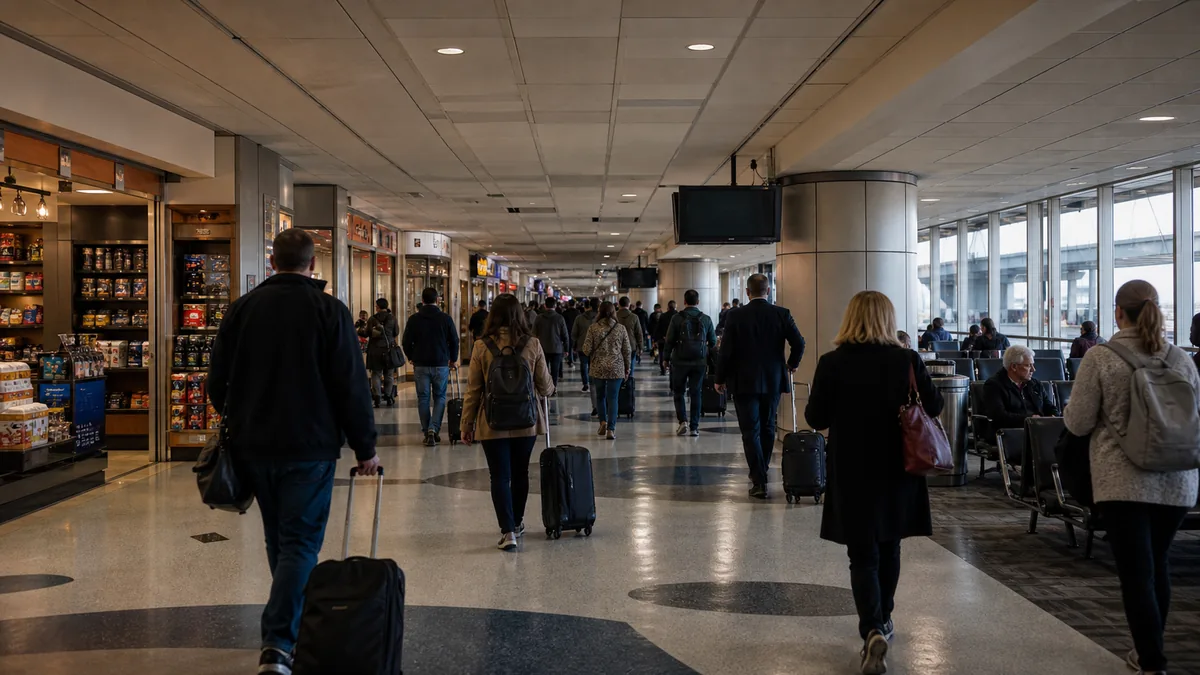
PHL beats EWR for a real set of travelers, and pretending otherwise would be brochure-style hedging. Here are the four scenarios where I’d send a Philly client to PHL without thinking twice.
American Airlines hub flyers
If you’re an AAdvantage member, PHL is your home airport. Period. American operates Philadelphia as one of its major East Coast hubs, with hundreds of daily departures and the scheduling flexibility that comes with hub status. For an AA loyalist, flying EWR means paying more, connecting through somewhere weird, or losing elite-status benefits. None of that is worth it for the United network. The Admirals Club and Flagship lounges at PHL aren’t Polaris, but they’re solid, and the gate-side AA staff solve problems faster than they do at non-hub stations. AAdvantage Executive Platinum members get genuine value at PHL that doesn’t transfer to Newark.
Closer for South and West Philadelphia
The geography is what it is. PHL sits 15 to 25 minutes from Center City and South Philly off-peak, with SEPTA’s Airport Line giving a walk-to-the-station option from 30th Street and University City. EWR is 80 to 100 minutes from the same neighborhoods on a clear day, and traffic on I-95 or the New Jersey Turnpike can push past two hours at peak. For a quick domestic trip on either airport, PHL’s time savings often beat Newark’s slightly lower fare. The numbers change once you add a checked bag, an early morning flight, or anyone who needs a less-stressful arrival. Then a pre-booked car to EWR makes sense again, which the Philadelphia to Newark Airport drive guide covers in detail.
Southwest Airlines
This is the one most Philly travelers know. Southwest has a strong PHL presence and effectively none at EWR. If your trip is a Southwest booking, PHL is the airport. Companion Pass holders, A-List members, and anyone flying Southwest on points don’t have an EWR option. Forcing a different carrier to fly out of Newark almost never makes sense for a Southwest-anchored trip.
Caribbean on American
The American Airlines depth on Caribbean destinations through PHL is strong, and the flight frequency, especially on Punta Cana, St. Lucia, Aruba, and a handful of smaller islands, is higher from Philadelphia than Newark. If your trip’s anchor is a Caribbean resort booked through an AA package, PHL is the smart pick. EWR can’t match it.
Making the airport decision: a six-scenario framework
Six scenarios, six answers, all of them anchored to the Newark Airport United hub vs PHL trade-off. This is the framework I’d hand a Philly-area client who called me cold and asked which airport to use for a trip they hadn’t fully decided on yet.
Flying United to Europe? EWR
The Star Alliance frequency, the Polaris cabin, and the connection options in Europe through Frankfurt or Munich make Newark the clear pick, even with the longer ground time from Philly. For travelers north of Center City and through Bucks County to Newark Airport territory, the calculus tilts even further toward Newark.
Flying American domestic? PHL
AAdvantage status, hub frequency, and geographic proximity all point the same way. Don’t overthink it.
Need Star Alliance to Asia? EWR
Singapore Airlines, ANA, Asiana, EVA Air, Thai, and Air India all touch the Star Alliance network in ways that work through Newark’s hub flow. Trying to chain an equivalent itinerary through PHL means either backtracking or losing the alliance benefits.
Quick domestic trip from South Philly? PHL
A 90-minute fare savings at EWR doesn’t beat a 60-minute ground time savings at PHL when you’re flying coach to Chicago for two days.
Flying Southwest? PHL
No comparison there. Southwest is the choice, PHL is the airport.
Flying internationally on a non-alliance carrier? Compare both
Open Google Flights, set the search to flexible dates, and check both airports side by side. Carriers like Emirates, Qatar, El Al, and certain Asian or African flag carriers have their own logic at each airport. For trips where the carrier is the constraint, the airport question gets answered by which one your airline serves. The answer is usually knowable in 30 seconds. The question is rarely “which airport is closer.” It’s “which airline am I flying.” Answer that and the airport picks itself.
After you fly EWR: the ride home to Philadelphia
Pre-booked door-to-door is the late-night default
Most of this guide is the outbound side of the Newark Airport United hub story. The return trip is where Philly travelers get caught out. You land at EWR at 9 PM after a flight from Tel Aviv or Singapore, you’ve got bags, you’re jet-lagged, and you’re staring down a 90-minute ride home at the end of the trip.
Two options work for the return. The first is pre-booked door-to-door, which most of our return clients use after long-haul through EWR. The chauffeur tracks the flight, meets you at the Terminal C arrivals curb or inside baggage claim, and you’re on the New Jersey Turnpike inside fifteen minutes of clearing customs. The booking page for that is car service from Newark Airport to Philadelphia. Late-night inbound flights are a real strength of the chauffeured option, because Amtrak service from Newark Penn to 30th Street thins out after about 10 PM on weekdays and earlier on weekends.
Amtrak: works for solo and daytime, not for long-haul arrivals
The second option is Amtrak from Newark Penn Station, which works if you’re traveling light, arriving during the day, and willing to take the AirTrain into Newark Penn first. It’s the cheapest option and the right call for solo business travelers without checked bags. It’s a worse option for families, late arrivals, or anyone returning from a long-haul who wants the ride to be the easiest part of the trip.
Round-trip planning makes the airport choice cleaner
If the trip starts with a car service from Philadelphia to EWR outbound, the return logic gets simpler. For a 14-day trip to Asia or the Middle East where EWR has the only nonstop, the inbound ride home is part of the calculation. Book it before you leave, not after you land. For suburban Philadelphia travelers, the King of Prussia and Main Line guide covers the Route 202 morning-departure side and the Lehigh Valley guide covers Allentown and Bethlehem departures via I-78. For the Manhattan trip rather than the airport, the Philly to NYC car service guide covers the separate New York-bound calculation.
Frequently asked questions
Yes. Newark Liberty (EWR) is United’s fourth-largest hub in 2026, behind Chicago O’Hare, Denver, and Houston Bush. United operates 350+ daily flights from Newark to more than 160 domestic and international destinations, with Terminal C as the main hub building and the Polaris business class lounge inside for premium long-haul travelers.
Three reasons usually. International nonstops PHL doesn’t have (Tel Aviv, Mumbai, Delhi, Singapore, Cape Town, São Paulo, Stockholm, Athens). Star Alliance access through United for connections to 190+ countries. And the Polaris business class product on long-haul, which is a meaningful step up from what PHL offers on the American Airlines side. Most Philly-to-Newark travelers fall into one of those buckets.
It depends on the trip. EWR is better for international (especially Star Alliance), United loyalty, and the newer Terminal A and recently upgraded Terminal C experience. PHL is better for American Airlines hub flying, Southwest service, Caribbean destinations on AA, and pure geographic convenience from Center City and South Philly. Neither airport wins across the board.
Approximately 80 miles from Center City Philadelphia, with off-peak drive times of 80 to 100 minutes via I-95 north and the New Jersey Turnpike. Traffic can push the trip past two hours at peak. PHL, by comparison, sits 15 to 25 minutes from Center City off-peak. The drive math is a real consideration when picking between airports for a quick domestic trip, less of a factor for international long-haul where the connection or the cabin quality matters more.
United is the obvious one: EWR is United’s fourth-largest hub, with international service to Tel Aviv, Mumbai, Delhi, Singapore, Cape Town, São Paulo, Stockholm, and Athens that PHL doesn’t match. Star Alliance partners like Lufthansa, Swiss, Austrian, Singapore Airlines, ANA, EVA Air, and Polish LOT operate from EWR at frequencies PHL doesn’t. JetBlue has a stronger Newark presence than Philadelphia. The airport differences for a Philly-area traveler are mostly about which carriers and routes are available, not about Newark having airlines Philadelphia doesn’t have at all.